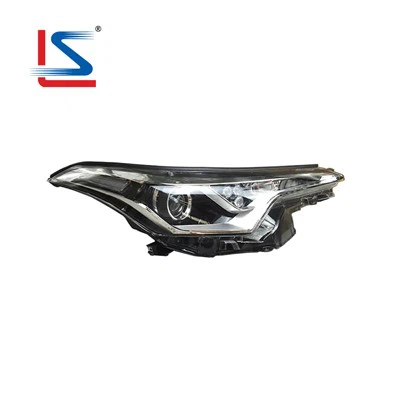
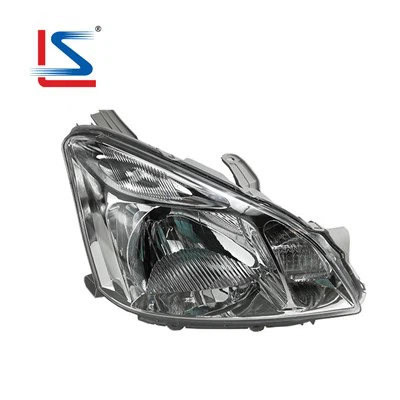
As a supplier of NCP100 Ractis lamps, I often receive inquiries from customers about the compatibility of the NCP100 with Ractis lamps of different wattages. This is a crucial question as the proper functioning of automotive lamps depends significantly on the compatibility between the power supply component, like the NCP100, and the lamp itself. In this blog, I will delve into the technical aspects to determine whether the NCP100 can be used in Ractis lamps with different wattages.
Understanding the NCP100
The NCP100 is a highly integrated power switcher that combines a fixed - frequency current - mode controller with a 700 - V avalanche - rugged MOSFET. It is designed to simplify the design of low - power offline power supplies. In the context of Ractis lamps, the NCP100 is used to regulate the power supply to the lamp, ensuring stable and efficient operation.
One of the key features of the NCP100 is its ability to operate over a wide range of input voltages. It has built - in protection features such as over - current protection, over - voltage protection, and thermal shutdown. These features are essential for protecting the lamp and the power supply circuit from damage due to abnormal operating conditions.
Ractis Lamps and Their Wattage Requirements
Ractis lamps come in different wattages, which are determined by their intended use and the lighting requirements of the vehicle. For example, high - beam lamps typically require more power than low - beam lamps to provide a brighter and more focused light beam. The wattage of a Ractis lamp can range from relatively low values for interior lamps to higher values for exterior lamps.
The power requirements of a lamp are directly related to its luminous intensity. A higher - wattage lamp will generally produce more light, but it also consumes more power. Therefore, when considering using the NCP100 with Ractis lamps of different wattages, we need to ensure that the NCP100 can provide the appropriate amount of power and voltage regulation.
Compatibility Analysis
Voltage and Current Requirements
The NCP100 has a specific output voltage and current capacity. To determine if it can be used with Ractis lamps of different wattages, we first need to analyze the voltage and current requirements of the lamps. The power (P) of a lamp is calculated using the formula (P = VI), where (V) is the voltage across the lamp and (I) is the current flowing through it.
For a low - wattage Ractis lamp, the voltage and current requirements are relatively low. The NCP100 can easily provide the necessary power as long as the output voltage and current are within its specified range. However, for high - wattage Ractis lamps, the current demand may exceed the maximum current capacity of the NCP100.
Efficiency Considerations
Efficiency is another important factor when using the NCP100 with Ractis lamps of different wattages. The NCP100 is designed to be efficient at low - power applications. When used with low - wattage Ractis lamps, it can operate at a high efficiency, converting most of the input power into useful light output.
However, as the wattage of the lamp increases, the efficiency of the NCP100 may decrease. This is because the internal losses of the NCP100, such as switching losses and conduction losses, become more significant at higher power levels. A decrease in efficiency can lead to increased heat generation, which may affect the reliability and lifespan of the NCP100 and the lamp.


Protection and Stability
The protection features of the NCP100 are crucial when dealing with Ractis lamps of different wattages. High - wattage lamps may draw more current, which can trigger the over - current protection of the NCP100 if the current exceeds the set limit. This is a safety mechanism to prevent damage to the NCP100 and the lamp.
In addition, the NCP100's ability to regulate the output voltage is essential for maintaining the stability of the lamp. Different wattage lamps may have different voltage sensitivities. If the NCP100 cannot provide a stable output voltage, the lamp may flicker or its light output may vary, which is not desirable for automotive lighting applications.
Practical Limitations
In practice, there are some limitations to using the NCP100 in Ractis lamps with different wattages. One of the main limitations is the maximum power handling capacity of the NCP100. As mentioned earlier, if the wattage of the lamp is too high, the NCP100 may not be able to provide enough power or may operate inefficiently.
Another limitation is the heat dissipation. High - wattage lamps generate more heat, and the NCP100 also generates heat during operation. If the heat is not dissipated properly, it can lead to an increase in the temperature of the NCP100, which may trigger the thermal shutdown feature and cause the lamp to stop working.
Case Studies
Let's consider some real - world examples. Suppose we have a low - wattage Ractis interior lamp with a wattage of 5W. The NCP100 can easily handle this load as the current and voltage requirements are well within its operating range. The lamp will operate stably, and the NCP100 will provide efficient power regulation.
On the other hand, if we have a high - wattage Ractis high - beam lamp with a wattage of 60W, the situation is different. The NCP100 may struggle to provide the necessary power, and its efficiency may drop significantly. In some cases, the over - current protection may be triggered, causing the lamp to malfunction.
Related Products
If you are interested in other automotive lighting products, we also offer Auto Headlight for TOYOTA ALLION 2007 - 2010 81170 - 20B20 20 - 451 178704 - A143, Toyota Avanza 2012–2015 OEM Headlight Assembly, and Toyota RAV4 2008 Headlamp Assembly. These products are designed to meet the high - quality standards of automotive lighting.
Conclusion and Call to Action
In conclusion, the NCP100 can be used in Ractis lamps with different wattages, but there are limitations. For low - wattage Ractis lamps, the NCP100 is a suitable choice as it can provide stable and efficient power regulation. However, for high - wattage lamps, additional considerations need to be taken into account, such as the power handling capacity and heat dissipation.
If you are in the market for NCP100 Ractis lamps or have any questions regarding the compatibility of the NCP100 with different wattage Ractis lamps, please feel free to contact us. We are more than happy to discuss your specific requirements and provide you with the best solutions for your automotive lighting needs.
References
- ON Semiconductor. NCP100 Data Sheet.
- Automotive Lighting Handbook.