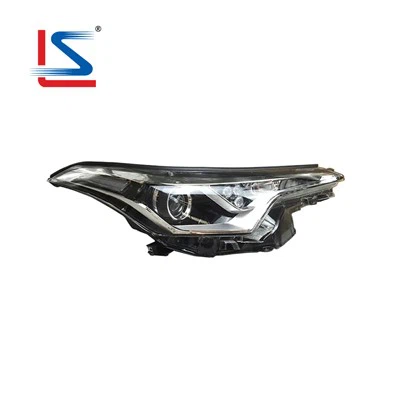
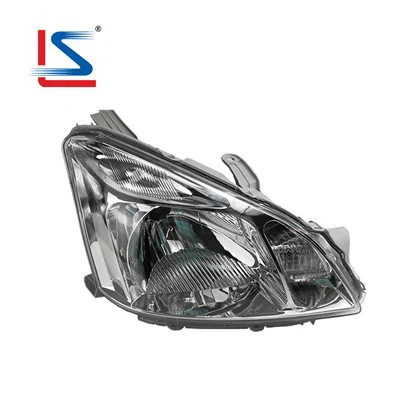
As a supplier of the Ractis NCP100 lamp, I often receive inquiries from customers regarding the technical aspects of our product. One of the most common questions I've encountered is whether the Ractis NCP100 lamp emits UV rays. In this blog post, I'll delve into this topic and provide a comprehensive answer based on scientific knowledge and practical experience in the automotive lighting field.
Understanding the Basics of UV Rays
Before we discuss whether the Ractis NCP100 lamp emits UV rays, it's essential to understand what UV rays are. Ultraviolet (UV) rays are a type of electromagnetic radiation with a wavelength shorter than that of visible light but longer than X - rays. They are divided into three main categories: UVA (320 - 400 nm), UVB (280 - 320 nm), and UVC (100 - 280 nm). UVC rays are mostly absorbed by the Earth's atmosphere and do not reach the surface. UVA and UVB rays can have various effects on human health and materials, such as causing skin aging, sunburn, and damage to certain plastics and rubbers.


How Automotive Lamps Work
Automotive lamps, including the Ractis NCP100 lamp, are designed to provide illumination for safe driving. The Ractis NCP100 is an automotive headlamp, and its primary function is to emit visible light in a specific pattern to illuminate the road ahead. There are different technologies used in automotive headlamps, such as halogen lamps, xenon lamps, and LED lamps.
Halogen lamps work by passing an electric current through a tungsten filament enclosed in a quartz bulb filled with a halogen gas. The heat generated by the current causes the tungsten filament to glow, producing light. Xenon lamps, also known as high - intensity discharge (HID) lamps, use an electric arc between two electrodes in a xenon - filled chamber to create light. LED lamps, on the other hand, use light - emitting diodes that convert electrical energy directly into light.
The Ractis NCP100 Lamp and UV Emission
The Ractis NCP100 lamp is an LED - based automotive headlamp. LEDs have several advantages over traditional halogen and xenon lamps, one of which is the minimal emission of UV rays. In the manufacturing process of LEDs, the internal structure is designed to produce light in a very specific way. The semiconductor material in an LED has a bandgap that determines the energy and wavelength of the emitted light. Most automotive LEDs are engineered to emit light within the visible spectrum, typically in the range of 400 - 700 nm.
LEDs work by the process of electroluminescence. When an electric current is applied to the LED, electrons recombine with holes in the semiconductor material, releasing energy in the form of photons. The energy of these photons corresponds to the wavelength of light. Since the design of automotive LEDs focuses on visible light production for effective road illumination, the probability of UV emission is extremely low.
However, it's important to note that in theory, any light - emitting device has the potential to produce a small amount of UV radiation. Some impurities in the semiconductor material or slight variations in the manufacturing process could potentially lead to the emission of very low - intensity UV rays. But for a well - designed and properly manufactured automotive LED lamp like the Ractis NCP100, the level of UV emission is so low that it is considered negligible.
Safety Standards and Testing
The automotive industry has strict safety standards when it comes to headlamp design and performance. These standards govern not only the illumination intensity and beam pattern but also the safety aspects, including the emission of harmful radiation such as UV rays. The Ractis NCP100 lamp undergoes rigorous testing to ensure compliance with international standards.
Manufacturers conduct tests using specialized equipment to measure the spectral output of the lamp, which helps in determining the presence and intensity of UV rays. If the UV emission exceeds the acceptable limits, the product will not pass the quality control process and will not be released to the market. Therefore, customers can be confident that the Ractis NCP100 lamp they purchase meets the necessary safety requirements in terms of UV emission.
Related Automotive Lamps in Our Product Line
In addition to the Ractis NCP100 lamp, our company also offers a wide range of other automotive lamps. For example, we have the TOYOTA PROBOX SUCCEED 2012 2013 2020 Lamp Auto DBE - NCP160V Auto Lamp OEM 8113052J50 8117052J50 PROBOX Headlight. This headlight is designed specifically for Toyota Probox and Succeed models from 2012 - 2020, providing high - quality illumination and compatibility with the vehicle's electrical system.
Another popular product in our line is the TOYOTA RAV4 2019 Headlights LED Headlamps ASSEMBLY EUROPE MODEL. These LED headlamps are engineered for the 2019 Toyota RAV4 in the European market, offering enhanced visibility and a modern look. And we also have the Toyota RAV4 2001 Headlight Assembly, which is designed to fit the 2001 Toyota RAV4 in the US market.
Conclusion and Call to Action
In conclusion, the Ractis NCP100 lamp is an LED - based automotive headlamp that emits a negligible amount of UV rays. Thanks to the design of LEDs and the strict safety standards in the automotive industry, customers do not need to worry about the harmful effects of UV radiation when using our product.
If you are in the market for high - quality automotive lamps, we are here to offer you the best solutions. Whether it's the Ractis NCP100 lamp, the TOYOTA PROBOX SUCCEED headlight, or any other product in our extensive catalog, you can count on us for reliable performance and excellent quality. We welcome you to contact us for procurement discussions and to learn more about how our automotive lamps can meet your needs.
References
- "Physics of Light - Emitting Diodes (LEDs)". Optoelectronics Research Centre, University of Southampton.
- Automotive Industry Safety Standards Handbook. International Organization for Standardization (ISO).